
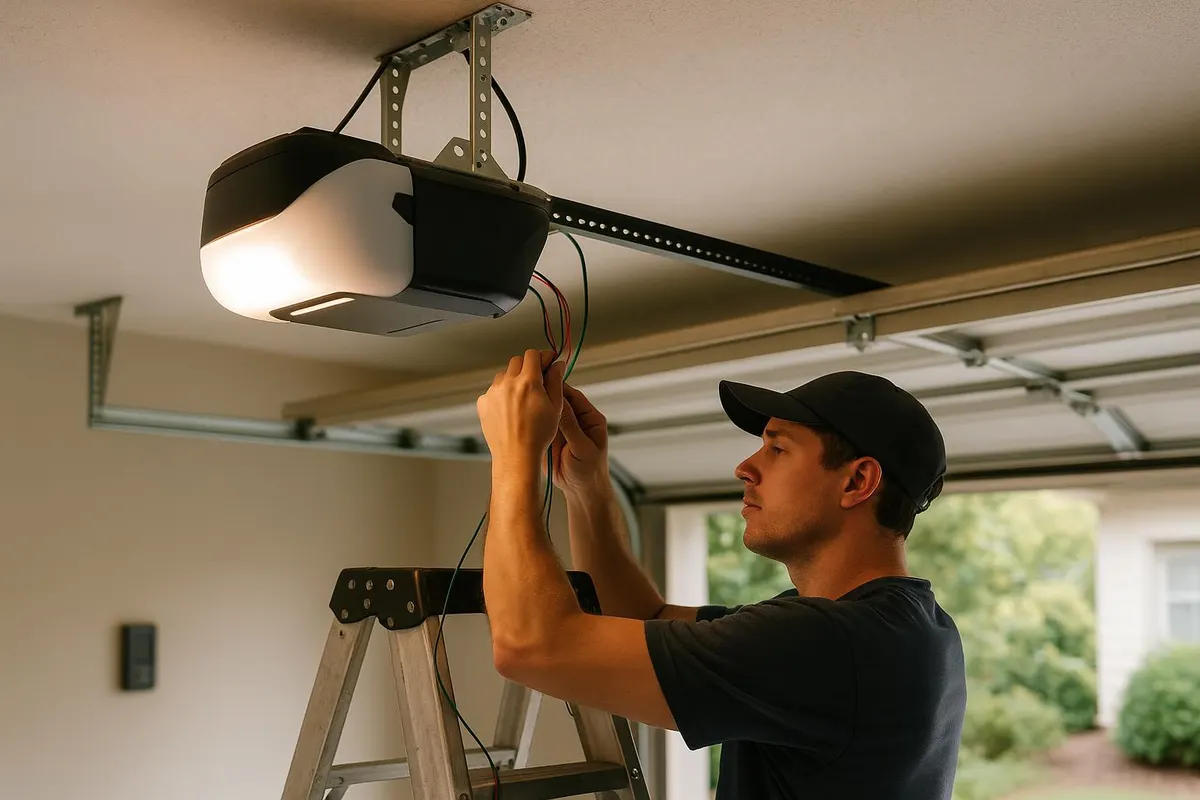
What a Technician Sees on This Call
The call usually starts the same way: "My opener is dying." The homeowner describes grinding noises, a door that reverses on its own, or an opener that strains and groans before the door even moves. By the time the technician arrives, they've often already decided they need a new opener.
Then the technician disconnects the opener and lifts the door by hand. That's when the real problem shows up. The door is heavy, or it drops like a rock once it passes the halfway point, or it wants to slam shut on its own. The opener wasn't dying of old age — it's been doing a job it was never built to do, fighting against springs that have lost their tension. In homes around Monroe and the surrounding Hudson Valley towns, this is especially common with original garage doors that have never had the torsion springs adjusted or replaced since installation, sometimes for decades.
What an Unbalanced Door Does to an Opener
A garage door opener is designed to lift and lower a door that's already properly counterbalanced by its springs. The opener's motor should only be guiding the door, not hoisting its full weight. When the springs weaken — which happens gradually from age, and faster from the freeze-thaw cycling and road salt exposure common in this area's winters — the opener has to pick up the slack.
Over time, this extra strain shows up as:
- Premature wear on the drive gear, belt, or chain
- A motor that runs hot and eventually burns out
- Increased stress on the opener's capacitor, especially on older chain-drive units
- Inconsistent travel limits, causing the door to reverse unexpectedly or stop short
- Safety sensor misalignment from the extra vibration and strain on the track
None of this is covered by patching the opener itself. If the spring tension is off, a new opener will wear out on the same timeline as the one it replaced.
Tools You'll Need
- A step stool or short ladder (to reach the manual release cord)
- Work gloves
- A flashlight
- A phone or notepad to jot down what you observe
You do not need a wrench, a winding bar, or anything that touches the spring itself. This test is about observation only.
How to Test Garage Door Balance
- Close the door fully. Start from a dead stop so you have a clean baseline.
- Find the manual release cord — the red-handled rope hanging from the opener carriage — and pull it to disconnect the door from the opener. This lets you move the door by hand without the motor assisting or resisting.
- Lift the door by hand slowly to roughly waist height, about halfway up the track.
- Let go and watch what happens. A properly balanced door will stay put, or drift down only slightly. A door that falls quickly or shoots upward on its own is out of balance.
- Repeat at a few different heights — a quarter open, three-quarters open — since some doors are balanced at one point in the track but not others, which often points to a bent track or uneven cable tension rather than just weak springs.
- Pay attention to how it feels in your hands, not just whether it holds position. Binding, grinding, or a jerky motion as it moves usually means a roller, hinge, or track problem layered on top of the spring issue.
- Reconnect the opener by pulling the release cord again (or following your opener's reconnect procedure) and run the door through a normal cycle to compare how it behaves with the motor engaged versus how it moved on its own.
What You Can Check Yourself vs. What Needs a Technician
Safe for homeowners: running the manual lift test above, listening for grinding or popping noises, checking that hinge bolts and track brackets are snug, and lubricating rollers and hinges with a garage-door-rated lubricant (useful heading into icy weather, since dried-out lubricant stiffens in cold temperatures and adds resistance the opener has to overcome).
Leave to a technician: anything involving the torsion spring itself. These springs are wound under extreme tension — enough to cause serious injury if the winding cone slips — and adjusting or replacing them requires specialized bars and training. The same goes for cable replacement, bent track repair, and recalibrating opener force settings once balance has been corrected. If your lift test showed the door falling fast or shooting up, that's a spring tension problem, not a DIY fix.
When to Call Monroe Garage Door
If your manual lift test shows the door isn't holding position, or you're hearing new noises alongside opener strain, it's worth having it looked at before the opener takes more damage. Monroe Garage Door handles spring replacement to restore correct counterbalance, and offers garage door maintenance visits that include lubrication, hardware tightening, and a full balance and safety check — catching these issues before a Hudson Valley winter puts extra strain on an already struggling system.
If you're in Monroe, Harriman, Chester, Woodbury, Central Valley, Highland Mills, Washingtonville, or Goshen and your garage door doesn't pass the balance test, give Monroe Garage Door a call before the opener pays the price.