
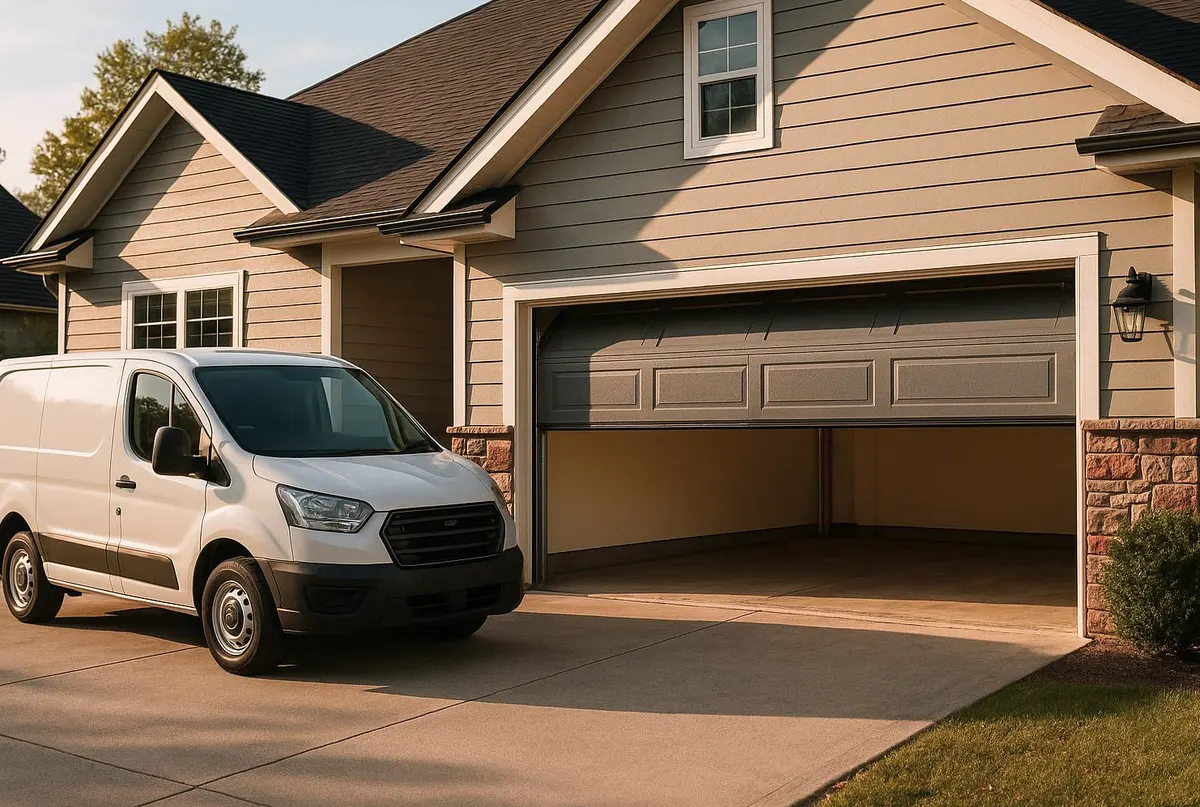
The mistake most people make first is judging the whole door by whether it still goes up and down smoothly. If you push the button and it opens, closes, and doesn't scrape the frame, it feels like proof the door is fine. That's tempting because it's the easiest test anyone can run themselves, no tools required. But "still works" and "still safe" are two different questions, and a door built before the mid-1990s can pass the first test and fail the second one badly.
Why "it still works" isn't the whole story
Federal rules starting in 1993 required new residential garage door openers to include photo-eye sensors and a working auto-reverse feature, specifically because older systems had injured people and pets who got caught under a closing door with no way to stop it. If your house has its original opener from that era or earlier, it may be running on hardware that predates those protections entirely. The door can cycle perfectly for years and still be missing the sensors that would stop it from closing on a kid's bike, a dog, or a foot.
What to retrofit right away — this part isn't optional
- Photo-eye sensors: the two small eyes mounted near the floor on either side of the track. If they're missing or an installer added them later as mismatched parts, get them properly set and aligned.
- Auto-reverse function: place a 2x4 flat on the ground where the door closes. If the door doesn't reverse on contact, that's not a quirky old-door habit, it's a mechanism that needs repair now, not on your to-do list for spring.
- Rolling-code opener: older fixed-code remotes send the same signal every time, which is easy for a cheap code-grabber to capture. A rolling-code opener changes the signal with every use.
- Spring containment cables: a torsion spring under tension that snaps without a containment cable can send metal across the garage. This is an inexpensive add-on with no downside.
- Bottom seal and weatherstripping: not a safety issue in the injury sense, but on an older door this is usually cracked or missing, and it's the one thing standing between your garage and the slush, salt brine, and meltwater that a Hudson Valley winter throws at a closed door.
What to leave alone — this is where the arguing usually starts
None of this means you need a new door. If the panels are structurally sound, not rotted, not rusted through, and the door isn't sagging or binding in the track, the door itself can often stay exactly as it is. A lot of the original housing stock in this area has solid wood or steel doors from decades ago that are cosmetically dated but mechanically fine. Original hinges and rollers that are still tight, lubricated, and moving without grinding don't need to be swapped out just because they're old. Replacing a door purely for its age, when the real issues are a missing sensor and a worn seal, is where people spend money solving the wrong problem.
Checks that matter more here than elsewhere
Freeze-thaw cycles work metal track brackets loose over a winter, especially on doors that have never been reset or re-shimmed. Road salt tracked in on tires and boots accelerates rust on springs, cables, and the bottom of steel panels, so a quick wipe-down and a look at the hardware before the first hard freeze is worth the ten minutes. Wood doors that swelled slightly in summer humidity can bind in the track once the weather turns cold and dry — if the door started sticking around the same time the season changed, that's your clue, not a sign the opener is failing.
When to call Monroe Garage Door
If the 2x4 test fails, if you're not sure whether your sensors are original equipment or added later, or if the springs look rusted and you don't want to find out the hard way whether the containment cable is there, that's the point to call in a technician rather than settle it yourselves. Monroe Garage Door handles both Garage Door Maintenance visits to assess what on an older door is sound versus what needs attention, and Spring Replacement when the springs are the weak link. We'll tell you plainly which parts are fine to leave alone.
If you're trying to settle this at home in Monroe, Harriman, Chester, Woodbury, Central Valley, Highland Mills, Washingtonville, or Goshen, give Monroe Garage Door a call before the next cold snap — we'll check your door in person and tell you exactly what needs doing and what doesn't.